Geographic origin: Europe.
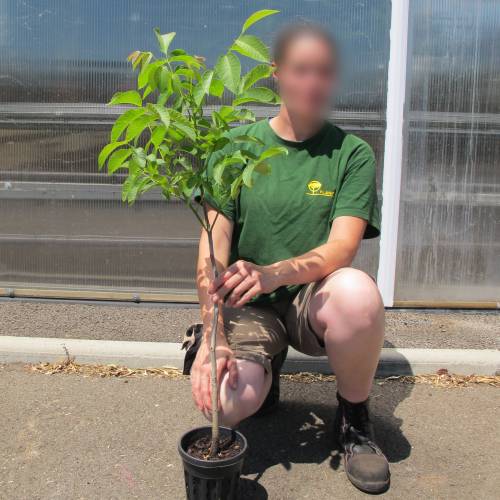
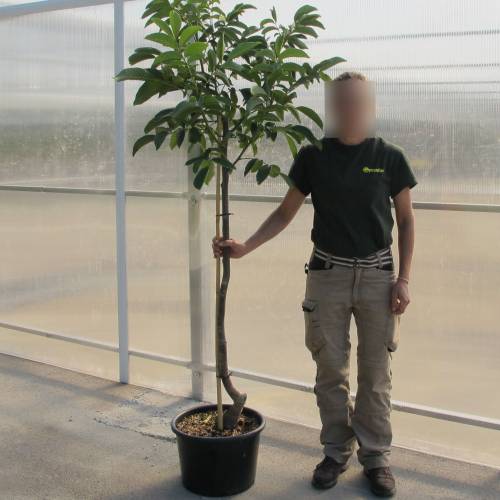
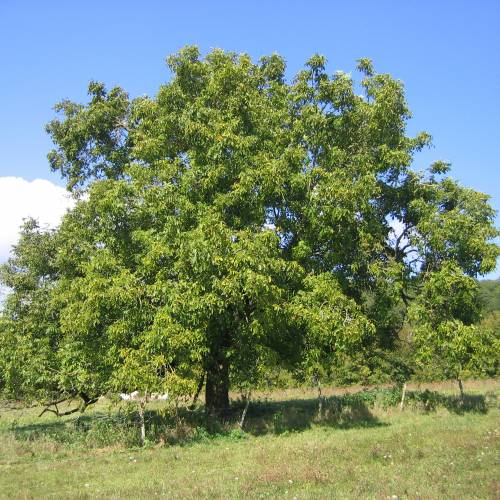
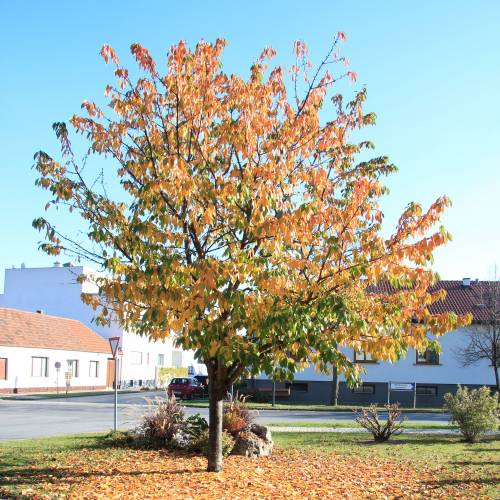
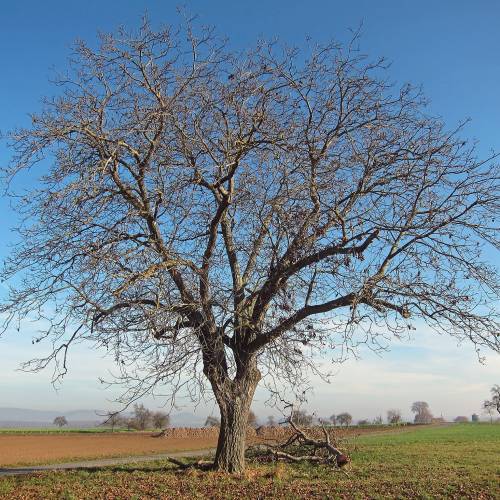
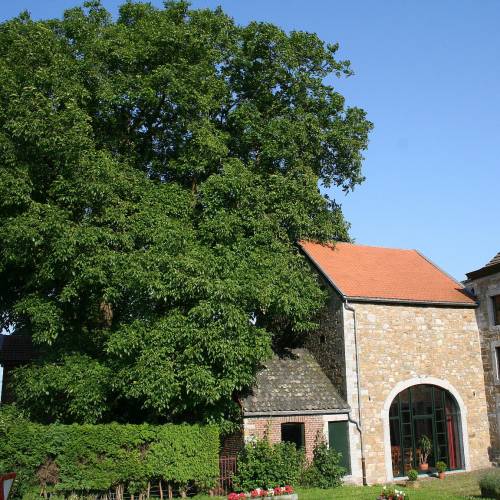
Adult size: Height up to 25m (82'), width up to 20m (65,6').
Foliage: Deciduous.
Type of soil: Lightly acid, light and rich.
Climate: Hardy to -20°C, can be sensitive to spring frosts prefers mild climates.
Position: Full sun.
Properties and uses:
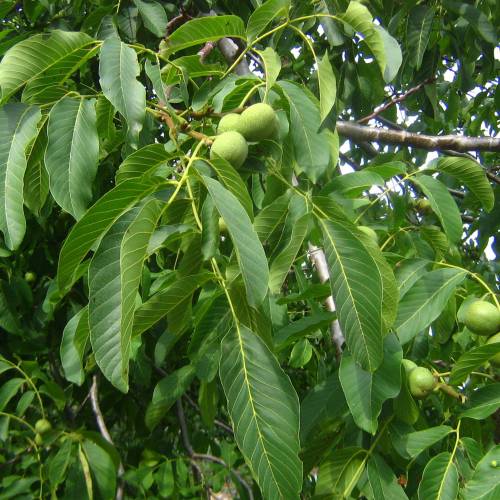
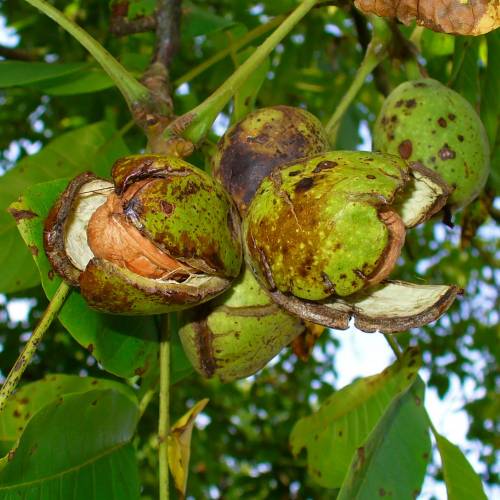
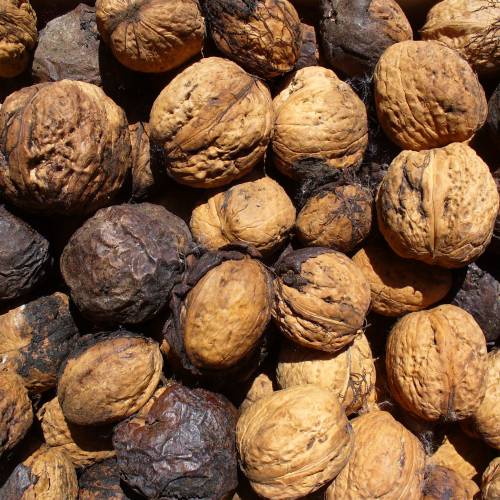
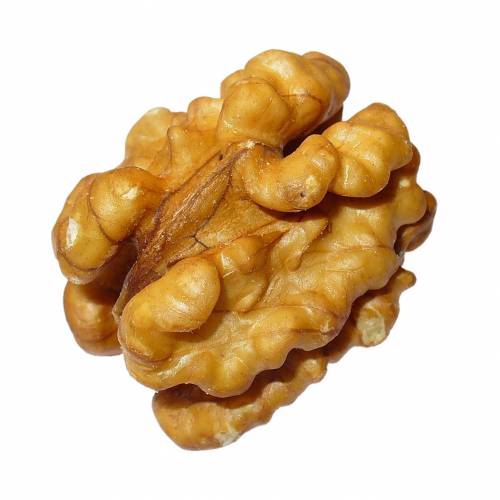
The pulpy green fruits are dark brown when ripe. It is the seed inside, the walnut that is edible. The fruits are picked at the end of October. The wood is much sought after in cabinet making. Plant alone.
Many fruit varieties and cultivars have been developed with the aim of increasing their yield.
This is how the 'Franquette' was created; it is the most widespread variety and produces large fresh hard-shelled nuts in August and September. This variety is especially impressive as even young trees can produce nuts.
The 'Parisienne' is also a very widespread variety. Its cropping is quite late (middle of October). The nuts are large and round, the shell is soft and the flesh delicate and scented. Additionally this variety is not susceptible to bacterial diseases.
Plant them now: the shortest way to your plate is through your garden!
The different varieties:
- The Walnut tree 'Franquette': The most widespread variety which produces big walnuts in hard shells, fresh in August-September. This variety is quite interesting as even the young specimens can produce fruits.
- The Walnut tree 'Parisienne': Also a common variety. Its production is rather late (mid-October). The walnuts are round and big; in soft shells with a fine, flavoured flesh. Finally, this variety is 'bacteriosis'- resistant.
- The Walnut tree 'Marbot': The variety 'Marbot' produces big graded fruits which reach maturity beginning of October. It is sensitive to harsh cold in winter.
- The Walnut tree 'Noire du Périgord': Highly fruitful variety, hardy and vigorous. The medium-size walnuts have a soft and sweet flavour; they reach maturity as from mid- October.
• See the Fruit Trees catalogue
• See the catalogue of tree and shrubs with edible fruits
• See the Edible Wild fruits catalogue
• See the Riparian forest trees and shrubs catalogue
• See the Plants for Agroforestry Catalogue
• See the Free-range poultries trees and shrubs catalogue

 Help
Help Account
 Basket